Invoices
Drafting a bill from the hours and expenses already on a matter, sending it, and recording what came back — and the parts of billing this is not.
3 min readReviewed 28 October 2026
An invoice belongs to a matter. It is drawn from work already recorded there — the hours logged against it and the expenses — rather than typed again somewhere else.
An accounting firm sees the same screen; an invoice belongs to an engagement there.
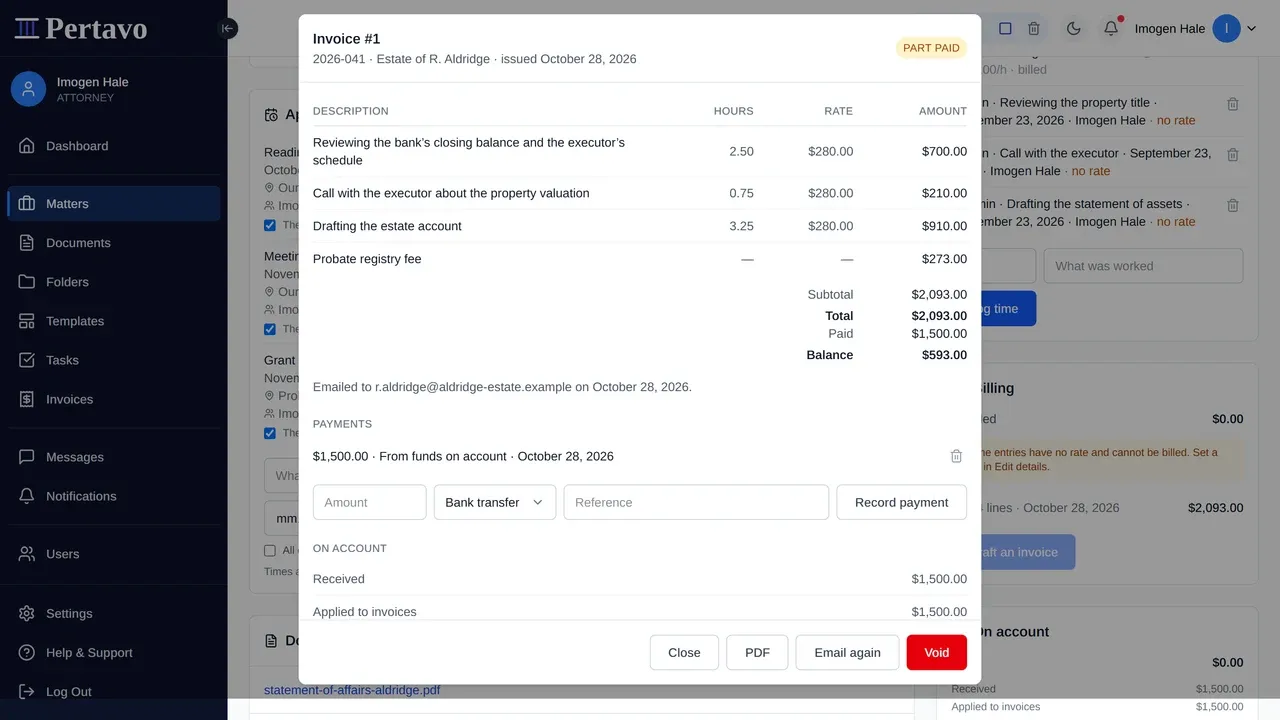
Draft, then sent
A bill starts as a draft, which is editable and has no number. Lines can be added, taken off and reordered, and nothing about it is owed by anybody yet.
Sending is the moment it becomes a document. It is numbered then, not when the draft was made, so a draft somebody abandoned does not eat a number and leave a hole in the sequence for an auditor to ask about. Numbers are sequential within your firm.
After that an invoice is sent, part paid, paid, or void. There is no deleting a sent invoice: voiding leaves it in the sequence and says what happened to it.
What goes on the lines
Two kinds, and both come from somewhere rather than being typed:
- Time — a line carries its minutes and the rate that work was charged at, copied from the entry when it was written. A firm that raises its rates in January does not reprice last year’s unbilled hours by doing so.
- Expenses — a disbursement recorded on the matter.
One tax rate applies to the sum of the lines. There are no per-line rates: no firm has asked for them, and a page that offers them has to explain them.
The invoice also keeps the currency it was drawn in, so a firm that changes currency later does not change what old invoices say they were for.
Whether it actually reached anybody
Sending by email and being sent are two different facts, and the screen says both. Sent means the document is frozen and the money is owed. Separately, the invoice records when an email left and the address it went to — and a firm that prints its bills and posts them answers that “no” every time with nothing being wrong.
This exists because the screen used to say SENT for an invoice that had reached nobody, and said it long after the one message that told the truth had gone.
Money that arrived
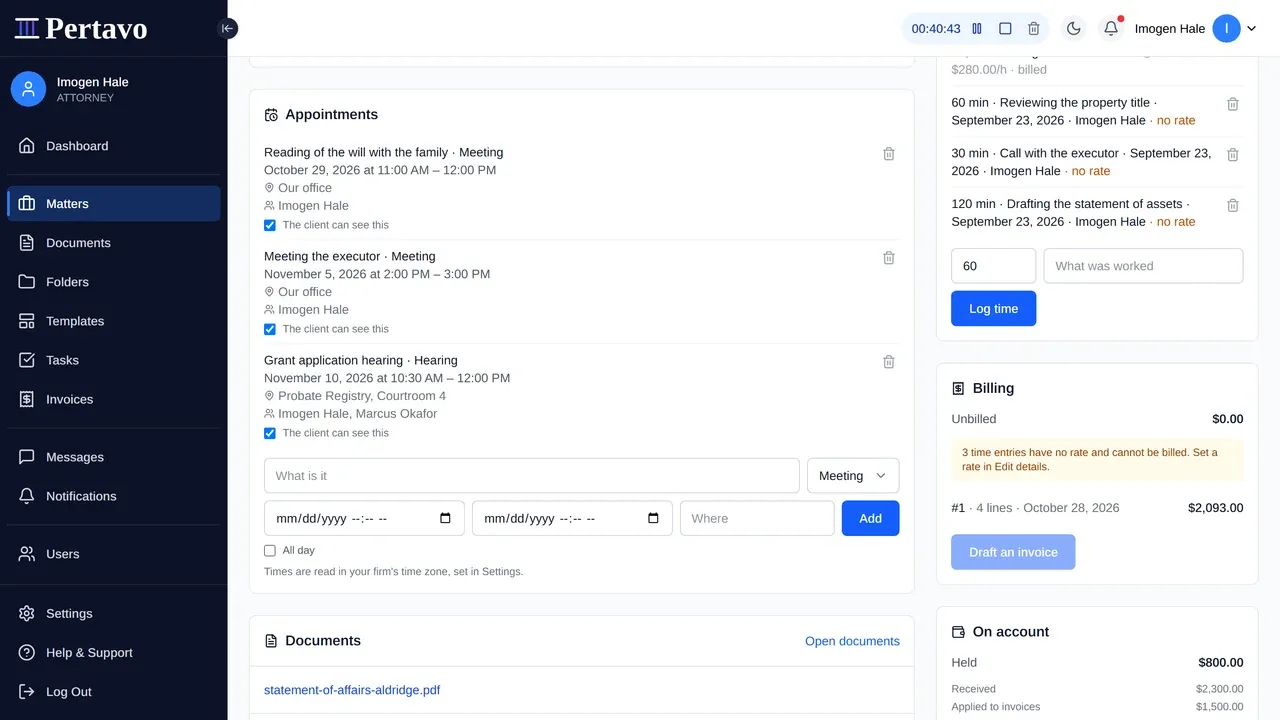
Payments are recorded, not collected. Somebody at the firm enters what came in and how — bank transfer, or whatever you already use — and the balance follows.
Money the client paid you before there was a bill is handled the same way: see client funds for holding it and Apply funds for setting it against an invoice.
What this is not
Be clear about the edges, because they decide whether this replaces anything you have:
- There is no way for a client to pay inside Pertavo. No card payment, no payment link on the invoice. The bill goes out; the money arrives however it already does, and somebody records it.
- It is not trust accounting. See client funds.
- No statements, reminders or dunning. Nothing chases an unpaid invoice for you.
- No accounts package. No general ledger, no VAT or sales-tax return, no export to one yet. The figures are here to bill from, not to file with.
This did not answer it?
Sign in and write to us from Help & Support inside the portal — a message from there arrives with your firm and your account already attached, so nobody has to ask you which is which.
Sign in to Pertavo